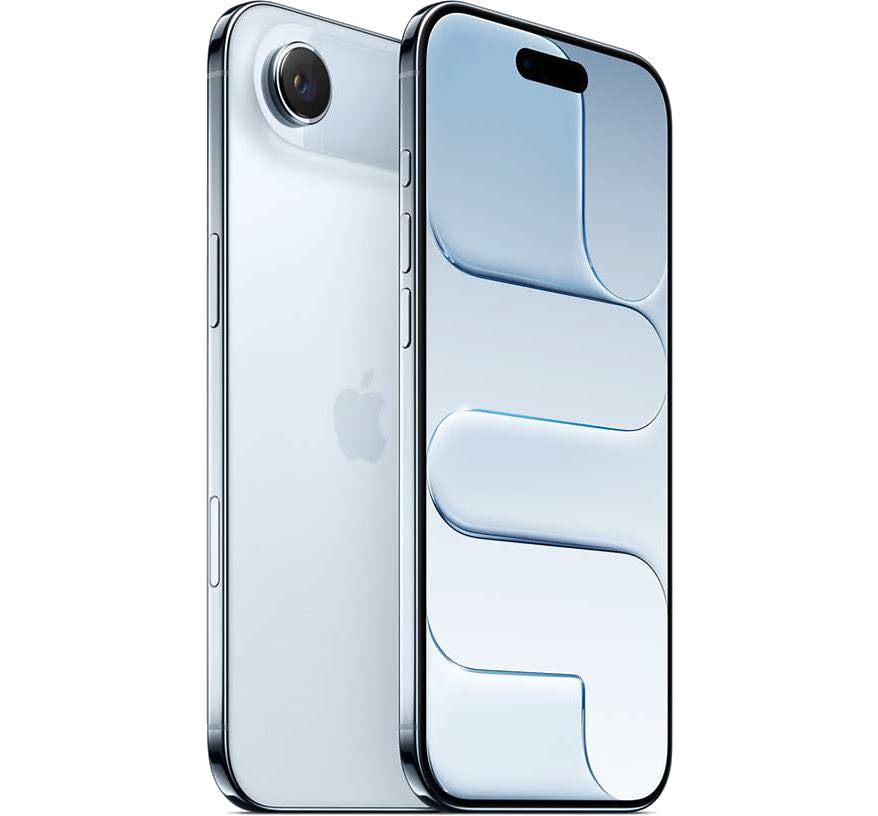
Apple introduced the iPhone Air at their September 2025 event.
The iPhone Air replaces the “Plus” slot in the lineup — think of it as the lightweight, slim sibling of the regular iPhone 17.
Key Specs & Features
Here are some of the standout features and specs:
Feature
Detail
Thickness / Weight
Just 5.6 mm thick — Apple’s thinnest iPhone ever. Weight around 165 grams.
Display
6.5-inch ProMotion display, 120 Hz refresh rate.
Materials / Build
Titanium frame + Ceramic Shield for durability. Described as more durable than previous models despite slim profile.
Processor / Connectivity
Uses the A19 Pro chip. Also has a new modem chip (C1x) and supports advanced wireless standards.
Camera
Single rear camera (48 MP) rather than a multi-lens setup.
SIM
eSIM only — it doesn’t have a physical SIM card slot.
Release / Price
Released September 19, 2025 in many countries. Preorders start September 12. Price starts at about US$999 for base storage.
TABLE OF CONTENTS
Table of Contents
iPhone 17 vs iPhone Air, what’s common
Both share quite a few modern iPhone features:
Both are part of the 2025 lineup, released / pre-orders around September 2025.
Both support ProMotion displays at up to 120 Hz refresh rate.
Both have the new front camera (“Center Stage”) with an 18 MP sensor.
Both are using Apple’s newer chipsets / architectures: e.g. the iPhone Air has the A19 Pro chip. The iPhone 17 uses A19 (non-Pro) chip.
Both have modern durability, water/dust resistance (IP68), etc.
iPhone 17 vs iPhone Air, Key Differences
Feature
iPhone 17
iPhone Air
Design / Thickness / Weight
About 0.31 inches (≈ 7.95 mm) thick.
Extremely thin: 5.6 mm thick, making it the thinnest iPhone in Apple’s history. Weighs about 165 g.
Display Size
6.3-inch Super Retina XDR display.
Slightly larger at 6.5-inch.
Rear Camera Setup
Dual rear cameras: includes Ultra Wide etc.
Only a single rear camera (a 48 MP “Fusion Main” lens). No ultra-wide or telephoto lenses.
Chip / Performance
Uses A19 chip (non-Pro version).
Uses A19 Pro chip (same generation as the Pro models), but with one fewer GPU core than the 17 Pro.
SIM / Connectivity
Has physical SIM & eSIM? Supports dual SIM (likely a physical + eSIM) depending on region.
eSIM only, no physical SIM tray.
Battery / Playback Time
Better battery than older models; specifics: more video-playback hours than the iPhone 16. Exact: around ? video playback hours (17 offers improvement over 16).
Slightly more constrained by its thin design; still gets up to 27 hours video playback and ~22 h streaming. With optional MagSafe battery pack, video playback can extend to ~40 h.
Speakers / Audio
Standard stereo setup.
Has only one speaker (the earpiece doubles for one channel) because of design constraints.
Price
Starts lower than Air: the base iPhone 17 (256 GB) is $799.
Starts at $999 for the 256 GB model.
Why choose iPhone Air over iPhone 17 or iPhone 17 Pro?
Ultra-thin, lightweight, premium feel The Air is Apple’s thinnest iPhone yet (5.6 mm) and weighs about 165 g, which makes it much easier to carry, pocket, or use one-handed compared to Pro models. Also it has a titanium frame + ceramic shield, which gives a premium build and durability.
Strong performance with modern chip The Air uses the A19 Pro chip, which is the same generation chip used in the Pro models. So while there are GPU or thermal compromises, it still gives high performance for most everyday tasks, gaming, AI features, etc.
High-quality display and advanced connectivity
A 6.5-inch ProMotion display at 120Hz. Plenty smooth visuals.
New wireless and modem tech: WiFi 7, Bluetooth 6, etc.
Uses an updated modem (C1X) and wireless chip (N1) which are more efficient.
Good battery life in everyday use The Air gets around 27 hours of video playback, which is solid. If you’re not pushing it constantly (video editing, very long gaming, etc.), that is likely enough for a full day or more. Also Apple offers a MagSafe battery pack accessory that can extend the video playback time up to about 40 hours.
Design & aesthetics / “style” statements If you care about how a phone looks and feels, the Air is clearly meant to stand out: ultra-slim profile, colors, premium materials. For many people, the joy of holding / using the device counts.
Better value on certain trade-offs The Air sits in a sweet spot: you get many Pro features (processor, display, durability) without paying all of the Pro-premium, especially for those whose usage doesn’t need full Pro camera or thermal features. If you don’t need triple cameras, high zoom, or longest sustained performance under heavy load, the Air may give you “enough” for less compromise.
What You Sacrifice by Choosing the Air
Of course, to get those advantages, you lose some things. It’s good to weigh them:
Less camera flexibility than the Pro: fewer lenses (no ultra wide / no extensive zoom) so fewer options for specialized photography.
Less ability to sustain peak performance / more thermal throttling under heavy load (because very thin body has less space for advanced cooling).
Slightly lower battery under heavy usage vs Pro models.
Fewer “Pro-only” features (like more advanced video recording modes, etc.).
When Choosing Air Makes Sense
Putting it all together, you probably should consider getting the Air if:
You value portability, sleek design, lighter weight more than having the best camera or thickest battery.
You don’t often do heavy video editing, or need long telephoto zooms, or extreme performance for hours.
You still want top-tier chip performance, smooth display, and modern connectivity, without paying fully for the Pro version for features you won’t use.
A style/look matter to you: the premium build, the thin profile, etc.
Is the Air as durable as the iPhone 17, 17 Pro or 17 Pro Max?
The iPhone Air is built to be very sleek and thin, yet Apple has made claims and design choices that aim to keep it fairly durable. But there are trade-offs, especially compared to the iPhone 17 Pro and Pro Max. Here’s how the Air stacks up, what it shares, and where it may be more vulnerable:
Shared durability features
These are things the Air gets that help it compete:
Ceramic Shield 2 front glass — Improved scratch resistance and drop protection.
Ceramic Shield on the rear — Helps protect the back glass similarly.
IP68 dust & water resistance — All iPhone-17-series models share this, meaning the phones can survive immersion in water to specified depths/time and resist dust ingress.
Titanium frame (Air) — Rather than a weaker alloy, the Air uses titanium for its frame, which gives it a better strength-to-weight ratio. Helps in resisting bending or flexing under stress.
Areas where the iPhone Air is less durable or more limited
Because of its ultra-thin design and some compromises, there are weak points compared to Pro/Pro Max models:
Thermal management
The Pro models (especially 17 Pro / Pro Max) have more room, more robust cooling systems (e.g. vapor chambers) that help during sustained heavy use (gaming, video editing, etc.). The Air’s thin profile limits how much thermal hardware you can include.
That means under heavy or prolonged load, the Air may heat up more, possibly throttle, or have more stress on internal components.
Structural rigidity vs bending / flex
Although the titanium frame helps, the thinner form factor means there is less material to resist bending forces. Apple did do a test (or invited bend tests) showing the Air can handle being flexed somewhat and returning to shape.
But being thinner inherently means it’s more at risk if put under strong, sharp bending stress (e.g. carrying in tight back pocket + sitting, or dropping in a way that stresses edge or frame).
Battery durability trade-offs
Because of space constraints, the Air has a smaller battery (fewer capacity) than the Pro/Pro Max models. While not directly about “durability” in terms of structural damage, fewer cycles, more stress per cycle, heating can affect battery lifespan.
Component protection compromises
Some features of Pro models meant to protect internal components under stress (e.g. more robust cooling, more shielding, more internal volume to allow for small deformation without stressing components) are harder to include in ultra-thin designs.
Bottom line: Is Air “as durable”?
In many everyday use scenarios — drops from moderate heights, exposure to rain/splashes, dust, rough handling — the Air should hold up well, almost as good as Pro models, thanks to its premium materials (titanium + Ceramic Shield) and IP68 rating.
In extreme or demanding conditions (heavy usage that generates heat, rough handling, high risk of bending stress, etc.), the Pro or Pro Max will likely outperform the Air in terms of durability and long-term resilience.
What led to the development of the iPhone Air?
iPhone Air didn’t come out of nowhere. It represents a very specific design philosophy and set of market goals from Apple. Here’s the background on what led to its development:
Apple’s long tradition of “Air” products
The MacBook Air (2008) was Apple’s first “Air” product, marketed as the thinnest laptop in the world at the time. It became iconic for balancing portability and performance.
Later, Apple introduced the iPad Air (2013), a slimmer and lighter take on the iPad.
Both showed Apple’s strategy: the “Air” label means ultra-thin, lightweight, stylish, yet powerful enough. The iPhone Air continues that naming tradition — a “design-first” model.
Consumer demand for thinness and portability
Over the past decade, many smartphone users have wanted lighter, sleeker devices that are easier to carry, especially as phones got bigger.
Even though battery life and camera modules usually increase thickness, there has always been a market for the “thinnest possible” device.
Surveys and Apple’s customer research indicated some people would gladly trade maximum battery size or extra camera lenses for a thinner, lighter phone.
Differentiation within the iPhone lineup
By 2025, Apple’s iPhone lineup had gotten crowded: iPhone 16, 16 Plus, 16 Pro, 16 Pro Max. Each focused on different priorities (mainstream, bigger screen, pro photography, ultimate performance).
Apple needed a “new angle” — a model not defined by size or camera count but by design minimalism.
The Air fills that gap: a premium option for users who prioritize style, portability, and modernity over maximum versatility.
Advances in materials and engineering
The Air could only happen once certain technologies matured:
Titanium frame: Lightweight but strong enough to prevent bending despite the 5.6 mm thin profile.
Ceramic Shield 2: New glass tech made the ultra-thin design more practical without sacrificing durability.
More efficient chips (A19 Pro): Apple Silicon’s efficiency meant Apple could deliver strong performance without needing oversized batteries or cooling systems.
MagSafe ecosystem: Since the Air has a smaller internal battery, Apple leaned on MagSafe battery packs as an accessory solution.
Strategic positioning vs. Pro models
Apple didn’t want everyone buying the Air — the Pro line remains for heavy users, photographers, and gamers.
The Air is for those who might otherwise pick a regular iPhone 17 but want something more premium, or for those who used to love the “mini” size but now want a bigger display without bulk.
It’s also a statement product: by making the thinnest iPhone ever, Apple reinforces its identity as a design leader.
Marketing & symbolic importance
The iPhone Air helps Apple tell a story: “we can still surprise, innovate, and push the boundaries of design.”
It echoes the original MacBook Air moment (Steve Jobs pulling it out of a manila envelope) — showing that Apple still prioritizes elegance and minimalism in an era where many competitors emphasize bulkier camera bumps and larger batteries.
The iPhone Air was developed to bring back Apple’s “Air” philosophy — a device that’s impossibly thin, light, and stylish — enabled by new materials, efficient chips, and customer demand for portability. It’s not meant to replace the Pro; instead, it creates a new lane in the lineup, appealing to design-focused users who want something distinct.
Trustindex verifies that the original source of the review is Google.
Affordable and high quality, basically replaced all the important parts of my iPhone 15 for ~250 (screen, back plate, battery). Very friendly service!!
Posted on Google
Mechie Abouthers
23 days ago
Trustindex verifies that the original source of the review is Google.
Only does Mac and apple only
Posted on Google
Austin Rakowski
47 days ago
Trustindex verifies that the original source of the review is Google.
I needed to get my cracked displayed repaired on my MacBook. This was my experience with the Apple Store in Cherry Creek:
- First go to the store for a diagnostic appointment where they confirmed that my screen was indeed cracked
- They order the part and set up an appointment for me to come drop my computer off 5 days later.
- Despite having an appointment, I waited over an hour and had to leave due to restraints. They then released the part and I had to start the process over again with a new diagnostic appointment (as if my screen wasn't still broken)
With Denver Mac Repair:
- Dropped it off at 5:30PM Friday afternoon
- Was ready for pickup Monday at 3pm
Not to mention they were ~$70 cheaper than Apple. These guys are legends, support local and go here.
Posted on Google
Yannek Smith
58 days ago
Trustindex verifies that the original source of the review is Google.
Great professional care. They provided a lot of attention and care to help us resolve a persistent computer issue (security breach / possible hacking on personal computer). Thank you for going above and beyond and helping us feel safe using home laptop again.
Posted on Google
jimmy parkour
58 days ago
Trustindex verifies that the original source of the review is Google.
Fantastic service at a great price. Guys are super nice and professional!!
Posted on Google
Dariel Rodriguez Arias
59 days ago
Trustindex verifies that the original source of the review is Google.
Truly Exceptional Service
After more than six years, I finally got my MacBook Pro back to life—and I couldn’t be more grateful to Denver Mac Repair.
The staff was absolutely awesome: knowledgeable, skilled, professional, honest, and genuinely caring. In a world where people with true expertise and integrity can feel increasingly rare, these guys reminded me that they still exist.
They didn’t just repair my computer—they woke it back up after six years and brought back something I had almost given up on. That meant a lot to me.
Thank you, Denver Mac Repair, for your incredible work and for treating me with such honesty and professionalism. You guys are truly the best, and I highly recommend you to anyone who needs Mac repair!
Posted on Google
Carl IPsen
60 days ago
Trustindex verifies that the original source of the review is Google.
Super helpful and pleasant!
Posted on Google
Eric Rysner
64 days ago
Trustindex verifies that the original source of the review is Google.
All I can say is wow! My son accidentally dropped his iPhone in a river while on a backpacking trip. Turns out his iCloud backup had not been set up properly, and three years of pictures had been potentially lost. The guys at Denver Mac Repair got everything up and running and transferred to a new phone. These guys are awesome, knowledgeable, professional, and their pricing was very fair. Thank you!
Posted on Google
Paige Reilly
66 days ago
Trustindex verifies that the original source of the review is Google.
Incredible neighborhood computer store. My dad worked with one company for my whole childhood, and i spent a LOT of time with him have only found big box stores since, so i've been looking for a space that is as supportive as that business from my childhood....and I found it here! Great technicians, who share information freely and without arrogance, great prices and better location. Love this store
Posted on Google
Tom Masterson
67 days ago
Trustindex verifies that the original source of the review is Google.
I had a great experience, I dropped my iPhone in the hotel pool and it wouldn't turn back on. My cloud storage was full and Mac said they could do nothing about my files. I took my phone to Denver Mac and Christopher said they'd try to get the data off for me, he seemed very positive even said it worked 90% of the time. Two days later I got a call from AJ and he had all my family's vacation photos on a thumb stick and back to me before our flight. Christopher and AJ were both friendly and awesome! I don't know if I'll be back to Denver but if anyone is headed that way with an iPhone Denver Mac is the place.